
(LibertyInsiderNews.com) – Foreign money and backchannel politics are colliding in a Miami courtroom, putting Secretary of State Marco Rubio on the witness stand in a case that tests how well Washington can spot — and stop — covert influence.
Quick Take
- A federal trial that opened March 23, 2026, accuses former Rep. David Rivera of laundering money and secretly lobbying for Venezuela’s Maduro regime without registering under FARA.
- Prosecutors say a $50 million Citgo contract tied to Venezuela’s PDVSA was used as cover, with about $20 million paid out and millions routed to a yacht-management firm linked to Raúl Gorrín.
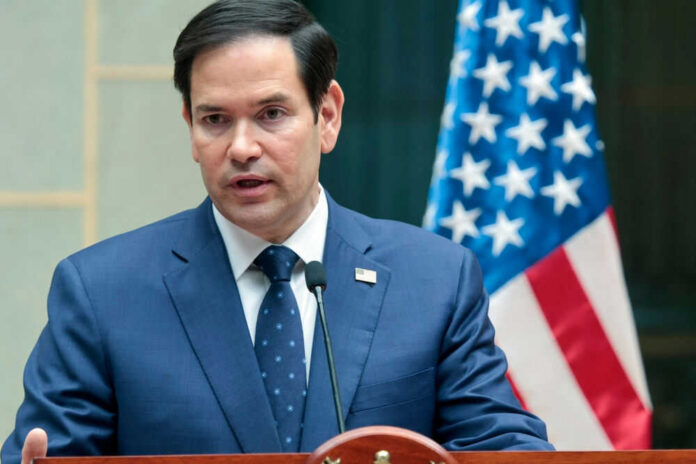
- Rubio is appearing as a government witness about 2017 meetings and communications involving Rivera and Gorrín, a Venezuelan media tycoon accused in separate bribery allegations.
- The defense argues Rivera’s work was legitimate consulting tied to a U.S. subsidiary and claims he pursued anti-Maduro outcomes, not pro-Maduro influence.
Rubio’s Testimony Puts a Spotlight on Backchannels
Federal prosecutors began presenting their case in Miami by centering the unusual personal connection: Rivera once shared a home in Tallahassee with Rubio before both men rose in Florida politics. Now, Rubio is testifying as a government witness about events in 2017, when Rivera allegedly arranged meetings at his Washington-area home and communicated with Rubio ahead of a meeting involving President Trump. The government’s theory hinges on whether those contacts were part of an undisclosed foreign influence effort.
Available reporting indicates Rubio has not been charged, and the public record described so far frames him as a witness to what Rivera was doing and saying in that period. That distinction matters for voters who want accountability without headline-driven guilt-by-association. The trial is still in its early stage, and testimony is expected to clarify what Rubio understood about Rivera’s purpose, who Rivera represented, and how Rivera described the Venezuelan-linked intermediary Raúl Gorrín.
The Core Allegation: A $50 Million “Cover” Contract and FARA
Prosecutors accuse Rivera of using a $50 million contract tied to Citgo, the U.S. subsidiary of Venezuela’s state oil company PDVSA, as a pretext while he allegedly lobbied for Venezuela’s Nicolás Maduro government. The charges include money laundering and failing to register under the Foreign Agents Registration Act (FARA). The alleged scheme is described as using intermediaries and coded communications, with Rivera allegedly treating foreign-policy access as something to be monetized behind the scenes.
The defense disputes that characterization and has argued the work was tied to a U.S. entity, raising the central legal and factual question: was Rivera acting “at the order, request, or under the direction or control” of a foreign principal, or performing domestic consulting that did not trigger FARA? That question is not academic. Conservatives who believe in limited government still benefit from clear transparency rules when foreign regimes try to buy influence, because the alternative is a shadow government of lobbyists.
Key Players: Gorrín, Sessions, and a Subpoena Fight Over Susie Wiles
Prosecutors describe Raúl Gorrín as a conduit — a Venezuelan media tycoon linked to allegations of bribery — who helped connect Rivera to Venezuelan officials. Reporting also ties Rivera’s efforts to meetings with influential Republicans during Trump’s first term, including former Rep. Pete Sessions. Separately, the defense sought to subpoena White House Chief of Staff Susie Wiles, who previously worked in lobbying circles connected to the broader Venezuela influence ecosystem described in the case.
A judge allowed material related to Wiles to be sealed and prosecutors opposed the defense subpoena effort, leaving the jury to focus on what is admissible and proven about Rivera’s actions. From a rule-of-law perspective, that procedural fight underscores how foreign influence cases can become partisan theater if they are not grounded in documents, payments, and verifiable communications. So far, the public reporting emphasizes alleged money flows, alleged coded chats, and the claimed purpose behind Rivera’s outreach.
Why This Case Hits a Nerve: Sovereignty, Transparency, and Trust
For Americans who watched years of elite failure on borders, spending, and “global norms,” the idea that a sanctioned socialist regime could quietly angle for leverage inside the U.S. political system is infuriating — and it is exactly why FARA exists. The Constitution protects speech and advocacy, but it does not require citizens to tolerate hidden foreign principals. If the government proves its case, the outcome would reinforce the baseline expectation that influence peddling must be disclosed.
Rubio to testify in trial of former roommate accused of secretly lobbying for Venezuela https://t.co/Bv0hnu6B8m via @nbcnews
— BillMcKny (@realBillMcKny) March 23, 2026
If the defense succeeds, the case could still expose a different problem: how easily political “consulting” and international dealmaking blur into lobbying that ordinary voters never hear about until years later. Either way, the trial is a reminder that America-first foreign policy depends on clean lines, not cozy backchannels. Limited information is available beyond what has been reported from filings and early trial coverage, and the verdict will ultimately turn on evidence presented in court.
Sources:
Rubio to Testify in Trial of Former Roommate Accused of Secretly Lobbying for Venezuela
Trump allies Rubio and Wiles ensnared in Venezuela lobbying scandal
Former Ally of Rubio in Florida Facing Charges of Acting as Unregistered Foreign Agent for Venezuela
Rubio to testify in trial of former roommate accused of secretly lobbying for Venezuela
The Miami Trial Exposing Foreign Influence in Trumpland
Copyright 2026, LibertyInsiderNews.com