
(LibertyInsiderNews.com) – U.S. Navy’s blockade of Iranian ports exposes glaring weaknesses, as ships slip through and commanders steer clear of Iran’s missile-filled Strait of Hormuz—prompting questions about endless foreign entanglements draining American resources.
Story Snapshot
- Former UN inspector Scott Ritter labels the U.S. naval blockade an act of war, but calls it ineffective posturing since the Navy avoids the Strait of Hormuz.
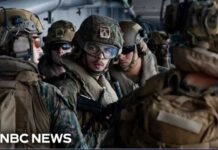
- CENTCOM deploys over 10,000 personnel and dozens of warships in the Gulf of Oman, turning back some vessels while others break through.
- Iran maintains de facto control of the Strait, a chokepoint for 20-30% of global oil, heightening escalation risks amid a fragile ceasefire.
- Ritter warns the operation serves as political theater for domestic optics under President Trump, potentially forcing unwanted negotiations.
Blockade Details and Early Results
U.S. Central Command announced a naval blockade targeting Iranian ports, deploying over 10,000 personnel, dozens of warships, and aircraft in the Gulf of Oman. In the initial 24 hours, no ships passed fully, with six merchant vessels turning back to Iranian ports after hails from U.S. forces. However, reports indicate two Iranian-sanctioned ships and one Panamanian vessel broke through the cordon. CENTCOM claims initial success, but enforcement relies on warnings without boarding or entering the Strait proper.
Ritter’s Critique: Posturing Over Power
Scott Ritter, former UN weapons inspector, dismisses the blockade as pure posturing and a legal act of war lacking teeth. U.S. Navy vessels stay outside the Strait of Hormuz to avoid Iranian coastal missile defenses capable of sinking ships. Ritter argues this avoidance undermines credibility, contrasting CENTCOM’s optimistic reports with leaky enforcement allowing sanctioned ships to proceed. He predicts Russian and Chinese tankers, possibly Wagner-protected, will ignore hails entirely.
Strategic Context and Historical Precedents
The Strait of Hormuz handles 20-30% of global oil trade, a flashpoint since the 1980s Iran-Iraq Tanker War. President Trump’s maximum pressure campaign previously threatened blockades but never executed them due to these risks. Pre-blockade U.S. bombings and sanctions strengthened Iran’s regime rather than weakening it, per Ritter. A recent U.S.-Iran ceasefire now hangs in balance, with the blockade viewed as a violation akin to airstrikes, prompting Iranian warlike gestures without direct naval clashes.
Stakeholders and Power Dynamics
Key players include President Trump pursuing sanctions enforcement for leverage, U.S. CENTCOM executing operations at a safe distance, and Iran’s military dominating the Strait through missile superiority and coastal tactics. Russia and China operate challenging tankers, complicating U.S. efforts. Ritter highlights Trump’s escalations as politically motivated for American audiences, potentially influenced by foreign powers, while Iran defends sovereignty. This setup reveals U.S. operating externally to minimize losses.
Implications for America and Global Markets
Short-term risks include ceasefire collapse, Iranian retaliation against U.S. bases, and tanker incidents spiking oil prices. Long-term, the blockade’s ineffectiveness undermines sanctions, benefiting Iran, Russia, and China while forcing U.S. negotiations from weakness. Domestically, it projects strength for Trump amid GOP control, yet erodes credibility abroad. Americans on both sides grow weary of elite-driven foreign adventures diverting funds from pressing needs like border security and energy independence, echoing frustrations with deep state priorities over the heartland.
Sources:
Copyright 2026, LibertyInsiderNews.com