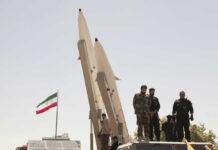

(LibertyInsiderNews.com) – A hypothetical U.S. strike campaign against Iran could fracture NATO unity faster than it defeats Tehran, leaving American taxpayers and troops to carry the bill.
At a Glance
- No verified “Trump Iran war” exists in the provided research; the scenario is speculative and built from past escalations and alliance dynamics.
- Past flashpoints—leaving the Iran nuclear deal in 2018 and the 2020 Soleimani strike—show how quickly tensions can spike without NATO formally being involved.
- NATO’s biggest risk is political: internal division if Washington acts unilaterally, especially as Europe worries about energy shocks and escalation.
- MAGA voters are split between backing Israel and rejecting another open-ended Middle East entanglement that drives up oil and distracts from securing the homeland.
What the research actually confirms—and what it doesn’t
The research provided does not document an active, verified “Trump Iran war.” Instead, it frames a question about whether NATO could become “collateral damage” if a second-term Trump administration launched major military action against Iran. That distinction matters for readers trying to separate real reporting from rumor and online panic. The factual foundation here is historical: decades of U.S.-Iran hostility, recent proxy conflict, and alliance friction when Washington moves fast.
The clearest precedents highlighted are President Trump’s first-term “maximum pressure” approach, the 2018 U.S. withdrawal from the JCPOA nuclear deal, and the January 2020 strike that killed Qasem Soleimani, which triggered Iranian retaliation but did not lead to a NATO-invoked war. The research also points to ongoing regional instability through Iranian-aligned groups, including pressure on shipping lanes and broader Israel-Iran shadow conflict dynamics that can escalate rapidly.
How a U.S.-Iran conflict could pull NATO into the blast radius
NATO is not Israel, and Israel is not NATO, but geography and logistics can drag allies into a crisis. The research flags NATO’s “southern flank” vulnerability, including Turkey’s role as a NATO member with its own complex relationship with Iran and regional security. If U.S. strikes required staging, basing, or defensive deployments around the Mediterranean and surrounding corridors, allied governments could face immediate domestic pressure over participation—even if they never voted for it.
The alliance risk is also procedural. NATO has consultation tools that fall short of war, including Article 4 consultations when a member feels threatened, but the research suggests a U.S.-led operation might not meet the threshold for collective defense under Article 5. That gray zone is where political fights ignite: some European capitals may demand coordination and limits, while Washington may push speed and deterrence. In practice, that can mean a divided alliance operating under mismatched rules and public narratives.
Energy prices, inflation memories, and the political pressure cooker at home
For American families already frustrated by years of inflation and energy volatility, the research warns that conflict could spike oil prices sharply in the short term, with estimates in the report ranging from 20–50% increases and scenarios above $100 per barrel. Even if those figures are presented as impact analysis rather than guaranteed outcomes, the direction of risk is clear: Middle East conflict tends to tax working households first through gas, heating, and shipping costs.
That is where today’s conservative split becomes politically combustible. Many Trump supporters backed him because he criticized “endless wars” and promised to put Americans first, including stabilizing energy costs and focusing on border security and domestic strength. A new conflict—especially one without clear congressional debate, defined objectives, or a limited timeline—would intensify the perception that Washington’s foreign-policy machine always finds a way back to regime-change thinking, no matter who is in office.
Alliance cohesion versus “America First”: the NATO tradeoff
The research describes an enduring tension: Trump has criticized NATO burden-sharing and demanded higher defense spending, while European governments fear abandonment and rely heavily on U.S. capabilities. In a major Iran crisis, that imbalance could become a wedge issue inside the alliance. If the U.S. acts first and asks questions later, some allies may resist materially or politically; if the U.S. slows down to build consensus, Washington may argue that deterrence is being diluted by bureaucracy.
The long-term concern flagged in the research is not simply battlefield spillover but strategic distraction. A major U.S. focus on Iran could divert attention and resources from NATO’s core mission of deterring threats closer to Europe, while adversaries like Russia or China might exploit alliance rifts. For conservatives who prioritize national defense without nation-building, this is the hard question: how to deter Iran, protect Israel and shipping, and avoid handing America’s rivals an opportunity created by NATO infighting.
What constitutional-minded conservatives should watch next
Because the underlying “war” scenario is not confirmed in the research, the immediate takeaway is about warning signs, not predictions. Watch for signals of unilateral escalation, rushed authorizations, or executive-branch actions that commit U.S. forces without clear limits and transparency. Watch also for how any potential operation is framed: narrowly defined deterrence and defense is different from open-ended missions that expand. Limited data is available in the inputs, so the key insights summarized here rely on historical precedents and alliance mechanics.
For voters who are tired of globalism, overspending, and bureaucratic overreach, foreign policy still matters because it shows up at the pump, in the debt, and in the next expansion of federal power justified by “emergency.” NATO cohesion is valuable when it serves American security, but it becomes a liability when Washington is expected to pay, fight, and rebuild while allies argue. The central question is whether leadership learns from Iraq and Afghanistan—or repeats the pattern under a new label.
Sources:
In-depth reporting strategies for civic journalism
How to write the story of your research
How to approach in-depth reporting
Basic steps in the research process
Copyright 2026, LibertyInsiderNews.com