
(LibertyInsiderNews.com) – A new congressional probe is asking whether a major U.S. activist network is acting as a domestic megaphone for hostile foreign regimes—right as the Trump administration ramps up enforcement at the border.
Story Snapshot
- A Network Contagion Research Institute (NCRI) report alleges the Democratic Socialists of America (DSA) shows “narrative convergence” with the priorities of China, Venezuela, and Cuba.
- The House Ways and Means Committee scheduled a hearing (Feb. 10, 2026) focused on “malign foreign influence” and nonprofit transparency issues raised by the report.
- The report highlights ties between DSA-adjacent activism and groups reportedly funded by Neville Roy Singham, including protest infrastructure and messaging support.
- NCRI does not claim criminal conduct; it argues the patterns “warrant scrutiny,” including potential questions around FARA-style transparency expectations.
Why Congress Is Looking at DSA’s Foreign-Narrative “Convergence”
Federal scrutiny intensified after NCRI published a February 2026 report examining DSA communications and advocacy campaigns. NCRI argues DSA messaging frequently aligns with themes promoted by governments adversarial to the United States—especially on sanctions, “anti-imperialism,” and opposition to U.S. immigration enforcement. The committee focus, based on available reporting, is not a single protest but whether nonprofit ecosystems can be used to route influence into American politics without adequate disclosure.
NCRI’s report describes its approach as a narrative analysis, including large-language-model-assisted coding of themes across DSA statements and campaigns. The key allegation is not that DSA is formally directed by a foreign government, but that its public framing repeatedly “converges” with what China, Venezuela, and Cuba would prefer Americans believe about U.S. institutions. That matters because narrative campaigns can weaken trust in enforcement agencies and democratic legitimacy without requiring explicit coordination.
How Immigration Enforcement Became the Pressure Point
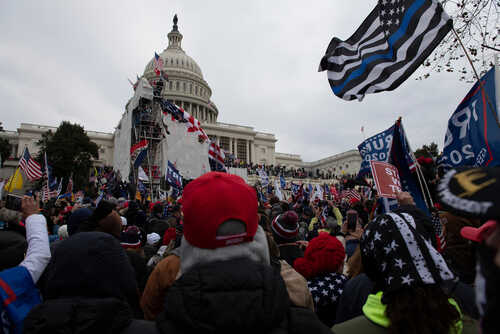
The report and related coverage point to anti-ICE activism as a recurring flashpoint, especially as immigration enforcement increased under President Trump’s second-term agenda. Specific examples referenced in the research include DSA chapter activity in Minneapolis and planned actions around February 11, promoted with toolkits encouraging organized opposition to ICE operations. NCRI contends that blame attribution in these campaigns disproportionately targets U.S. law enforcement and governance structures, matching foreign-state propaganda incentives.
Other reporting in the research set notes the broader political environment: Democrats and allied groups have faced internal tension over immigration enforcement, contractors, and the influence of activist pressure campaigns. That context helps explain why a congressional hearing would spotlight nonprofit influence channels now. When protests are marketed as purely grassroots, lawmakers often ask who is providing money, staffing, and logistics—especially if aligned messaging consistently favors adversarial foreign policy aims.
The Singham-Network Question: Funding, Front Groups, and Transparency
A central thread in the NCRI report is the alleged proximity between DSA activity and groups linked in reporting to Neville Roy Singham, a donor described as funding organizations such as the People’s Forum, CodePink, and the ANSWER Coalition. The report argues these organizations can supply protest infrastructure—promotion, coalition-building, and messaging—while helping narratives travel faster than traditional political organizing would allow. The research provided does not establish a single command structure, but it does point to overlapping ecosystems.
For conservatives focused on limited government and constitutional order, the practical issue is transparency. If major activist operations are effectively advancing foreign-state objectives—particularly by undermining confidence in border enforcement and U.S. sovereignty—then disclosure rules and enforcement mechanisms become central. NCRI recommends scrutiny that may include whether any entities should register under foreign-influence disclosure regimes, while emphasizing it is not alleging proven criminal wrongdoing in its report.
What the Hearing Could Clarify—and What Remains Unproven
The House Ways and Means hearing scheduled for Feb. 10, 2026 is positioned, based on the cited coverage, as a fact-finding event about “malign foreign influence” and nonprofit compliance. That format matters because it can put documents, funding flows, and witness testimony into the public record. It can also clarify whether “narrative convergence” is simply ideological overlap—common on the far left—or whether any operational coordination or undisclosed foreign support exists.
Several limits remain clear from the research provided. NCRI’s analysis argues patterns and incentives; it does not claim it has proven direct foreign control of DSA. Dates for some referenced events are described broadly, and the public-facing record shows DSA’s stated foreign-policy preferences—such as opposition to sanctions—without, on its face, proving foreign direction. Even so, Congress investigating the nonprofit influence pipeline signals a higher bar for transparency in an era of weaponized information.
Sources:
Far-left group foreign ties undermining US under guise protest report warns
Far-left group foreign ties undermining US under guise protest report warns
Exclusive: Democrats reckon with ICE contractor donations
Gen Z’s global revolt isn’t about ideology. It’s about institutions that don’t work.
Copyright 2026, LibertyInsiderNews.com