
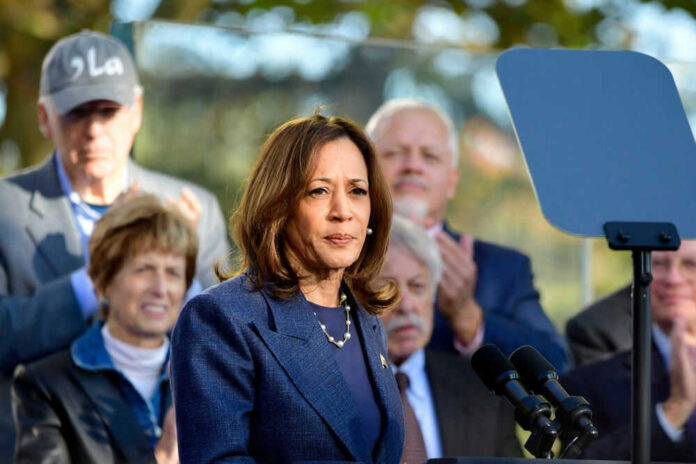
(LibertyInsiderNews.com) – Former Vice President Kamala Harris’s book tour was unexpectedly disrupted by pro-Gaza protesters, spotlighting tensions within U.S. politics regarding the Israel-Gaza conflict.
Story Overview
- Pro-Gaza protesters interrupted Kamala Harris’s book tour, challenging U.S. policy.
- Harris emphasized her vice-presidential role, stating, “I’m not president right now.”
- The incident highlights growing domestic pressure on U.S. leaders regarding Gaza.
- The protest reflects broader discontent within the Democratic base over foreign policy.
Protest Interrupts Harris’s Book Tour
On September 25, 2025, the first night of former Vice President Kamala Harris’s book tour took an unexpected turn. As Harris addressed attendees, pro-Gaza protesters disrupted the event, challenging the U.S. administration’s stance on the Israel-Gaza conflict. Harris attempted to address the interruption, expressing her understanding of the protesters’ concerns and reminding the crowd of her position as former Vice President, not President. Her response underscored the limitations of her current role in shaping foreign policy.
Harris’s statement, “I’m not president right now,” was a poignant acknowledgment of her place within the political hierarchy and the constraints it imposes. This incident is particularly significant as it occurred during a high-profile event intended to promote Harris’s literary work and political image. It also serves as a reminder of the growing activism surrounding U.S. Middle East policy, particularly among progressive and younger demographics.
The Israel-Gaza Conflict and U.S. Policy
The Israel-Gaza conflict has long been a contentious issue in international relations, often sparking debates over human rights and foreign policy. The United States has historically supported Israel, a stance that has come under increased scrutiny amid recent military actions in Gaza resulting in significant Palestinian casualties. The Biden administration, with Harris as former Vice President, has faced mounting criticism for its perceived unwavering support of Israel and reluctance to demand a ceasefire.
Pro-Palestine activism has intensified across the U.S., with many progressive voters and activists demanding a shift in policy. The disruption of Harris’s book tour is the latest in a series of public demonstrations aimed at pressuring the administration to adopt a more balanced approach to the conflict. This activism highlights the internal divisions within the Democratic Party, as leaders navigate complex international alliances and domestic political pressures.
Implications for Harris and the Democratic Party
For Harris, the incident presents both a challenge and an opportunity. On one hand, it underscores the difficulties she faces in balancing her official duties with her public image and potential presidential ambitions. On the other, her empathetic response to the protesters’ concerns may resonate with progressive voters who feel alienated by current U.S. foreign policy. However, it remains to be seen whether this approach will be sufficient to address the broader demands for change within the party.
The Democratic Party as a whole must contend with the implications of such public dissent. The protest at Harris’s event highlights the growing divide between the party’s leadership and its base on key foreign policy issues. This divide could have significant repercussions for the party’s cohesion and electoral prospects in upcoming elections, particularly as younger and more progressive voters play an increasingly influential role.
The Path Forward
As the book tour continues, Harris and her team will need to navigate ongoing activism and scrutiny. The incident has brought increased media attention to her stance on Gaza, with further disruptions at public events likely. Moving forward, the Democratic Party must address internal divisions and consider how to reconcile its traditional alliances with evolving public sentiment on international issues.
Ultimately, the disruption of Harris’s book tour serves as a microcosm of the broader challenges facing U.S. policymakers. It highlights the tension between established diplomatic positions and the demands of an increasingly vocal and active citizenry. How leaders like Harris respond to these challenges will shape not only their political futures but also the direction of U.S. foreign policy in the years to come.
Copyright 2025, libertyinsidernews.com