
libertyinsidernews.com — When a rock legend claims a late-night host was taken off the air because “the president can’t take a joke,” it hits a nerve for millions who already suspect powerful politicians and media moguls are quietly policing what Americans are allowed to hear.
Story Snapshot
- Bruce Springsteen used Stephen Colbert’s penultimate Late Show to blame President Trump and media executives for the show’s cancellation.
- Springsteen accused Larry and David Ellison of currying favor with Trump, calling them “small-minded people” who do not understand American freedom.
- Corporate explanations point to big financial losses, but hard evidence of political pressure has not surfaced publicly.
- The clash taps into a deeper fear on left and right that media decisions are controlled by unaccountable elites, not viewers.
Springsteen’s On-Air Accusation Against Trump and the Ellisons
Bruce Springsteen appeared on The Late Show with Stephen Colbert during the show’s final week and turned what could have been a sentimental goodbye into a pointed political charge. Standing beside Colbert, he told the audience, “You are the first guy in America who’s lost his show because we got a president who can’t take a joke,” directly tying the cancellation to President Donald Trump. Springsteen then said Larry and David Ellison “need to kiss his ass to get what they want,” explicitly naming media power brokers.[1]
Springsteen did not stop at assigning blame; he questioned the character and values of the executives he named. He called the Ellisons “small-minded people who got no idea what the freedoms of this beautiful country are supposed to be about,” framing the cancellation as an attack on free expression rather than mere business math.[1] By setting up the moment this way, Springsteen cast Colbert as a casualty of a broader struggle over who gets to speak freely in American culture and who gets silenced when speech becomes inconvenient.
What We Actually Know About Why The Show Ended
Public reporting about The Late Show’s fate has emphasized money, not politics. Coverage around Colbert’s final episodes noted that the network described the cancellation as a financial decision, including reports that the program was facing losses estimated at around forty million dollars per year.[2] Those figures, if accurate, would give any corporate board an obvious reason to end a show, even one with cultural impact. However, those numbers are coming through media summaries, not disclosed internal ledgers or board minutes that the public can independently examine.
So far, there is no publicly available contract, internal memo, or sworn statement directly showing that Trump or his administration intervened in the network’s decision.[1][2] There is also no documented correspondence demonstrating that Larry or David Ellison asked for the cancellation in exchange for regulatory help, merger approval, or any other government action.[1] That lack of hard evidence does not prove Springsteen is wrong, but it does mean his accusation currently rests on his word and circumstantial suspicion, not on records that citizens, journalists, or a court could scrutinize.
Celebrity Protest, Political Power, and Public Distrust
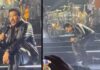
Springsteen chose to follow his comments with a performance of “Streets of Minneapolis,” described as an anti–immigration enforcement protest song written in response to deaths tied to federal immigration actions earlier in the year.[1] That artistic choice reinforced his message that something is broken in how power is exercised, from federal officers on the street to corporate executives in boardrooms. For supporters, the performance felt like a musician using his platform to defend a fellow critic of the administration and to call out intimidation.
For skeptics, the same moment can look like celebrity political theater: a powerful entertainer turning a complex business decision into a simple tale of villain and victim, without bringing forward evidence that would stand up beyond the cheering studio audience.[1] The tension reflects a broader pattern that now defines much of American media life. Corporate decisions about who stays on the air are often made behind closed doors, while the public sees only the fallout and competing narratives. In that vacuum, people project their fears about censorship, partisanship, and corporate greed onto every high-profile cancellation.[1]
Why This Story Resonates Across the Political Spectrum
This controversy lands in a country where many conservatives believe legacy media spent years attacking Trump and his voters, while many liberals believe corporate owners quietly sideline hosts who challenge entrenched interests. Both groups see an elite class of executives, donors, and political insiders who never seem to pay a price when ordinary people lose jobs, savings, or platforms. When Springsteen says Colbert was taken out because the president “can’t take a joke,” he taps into that bipartisan suspicion of a system rigged from the top.[1]
At the same time, the lack of transparent documentation from the companies involved leaves citizens stuck between dueling stories: a rock star’s charge of political retaliation and a corporate line about unsustainable losses.[1][2] Without disclosure of how the decision was made, viewers are forced to choose whom they trust, rather than being able to check the facts themselves. That information gap is exactly what fuels the sense that media, politics, and big money now operate as one opaque “deep state” machine, far removed from the values of open debate and accountability that Americans were taught to expect.
Sources:
[1] Web – Springsteen Rips Trump, Ellisons Before Performing ‘Streets of …
[2] Web – Trump’s Rocker Nemesis Flames Colbert’s ‘A**-Kissing’ Bosses
© libertyinsidernews.com 2026. All rights reserved.