

(LibertyInsiderNews.com) – Iran’s street uprising is colliding with Washington’s regime-change talk—raising the same hard question Americans remember from past interventions: what happens the day after?
Story Snapshot
- Mass anti-government protests that started in late December 2025 have intensified across Iran amid reports of internet blackouts, mass detentions, and widespread killings.
- Iran’s economic collapse—especially a sharp currency decline—appears to be a central trigger, but the unrest reflects broader grievances built up over years.
- President Trump has publicly pledged support for Iranians protesting the regime and signaled the U.S. is weighing military and non-military options.
- Analysts warn that military intervention can carry high risks and uncertain outcomes, while others argue diplomacy aimed at changing Iran’s behavior may still be viable.
Protests Spread as Iran Tightens the Screws
Iran’s protests, which began in late December 2025, have escalated into what some analysts describe as revolutionary activity, with demonstrators filling streets across multiple cities despite severe state repression. Reports described sweeping internet blackouts designed to cut Iranians off from one another and from the outside world. Credible accounts also cited more than 10,000 detained and roughly 6,000 killed in recent days, with uncertainty remaining because outages limit verification.
Iran’s response underscores the regime’s core advantage: coercion. Analysts describe Tehran as possessing immense surveillance and security capacity, and an existential drive to survive. That doesn’t mean stability is guaranteed, but it does explain why raw protest size is not the same as political victory. The information blockade also creates a fog that can be exploited by the regime, leaving outside observers with limited, delayed insight into events on the ground.
Economic Collapse Fueled the Spark—But Not the Whole Fire
Available reporting ties the initial trigger to economic freefall, especially a catastrophic currency decline that worsened everyday hardship. Yet the unrest is not framed as a single-issue riot. Analysts point to a convergence of long-running grievances, including human rights abuses and frustration with a system that offers few peaceful avenues for change. The regime’s failure to present a durable path out of recurring economic pain is widely cited as a structural weakness fueling repeated unrest.
The current upheaval also sits on top of recent history. The 2022–2023 “Women, Life, Freedom” movement after Mahsa Amini’s death demonstrated mass mobilization and open defiance of compulsory hijab enforcement, normalizing public resistance. That legacy matters because each wave of unrest can widen the circle of dissenters and deepen public willingness to challenge authorities, even when repression is severe. Analysts argue this cumulative pressure has steadily eroded the regime’s ability to impose its will.
Trump’s “Locked and Loaded” Signals Raise the Stakes
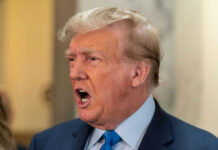
President Trump has issued unusually direct public commitments to intervene on behalf of protesting Iranians, including statements that the United States is “locked and loaded” to “rescue” people in the streets. Reporting indicates the administration is considering a range of military and non-military options. Analysts caution, however, that military intervention may offer limited near-term relief for civilians while raising the risk of escalation, blowback, and unpredictable consequences in a volatile region.
Diplomacy vs. Regime Change: Competing Paths With Real Tradeoffs
Policy experts differ over what the United States and allies should do next, and the debate is not purely academic. One camp argues the moment is ripe for renewed diplomacy focused on changing Iran’s behavior rather than collapsing the regime outright. Proposed frameworks include verified limits on uranium enrichment, credible inspection regimes, phased sanctions relief, curbs on ballistic missile development, and Iranian commitments to reduce support for regional proxies—paired with security assurances that regime change is not the strategic objective.
Another thread running through the analysis is caution drawn from hard lessons of unplanned upheaval: toppling governments can be easier than building stable outcomes afterward. That warning is not an excuse for Tehran’s abuses; it’s a reminder that U.S. policymakers must weigh second- and third-order effects before turning threats into action. For a conservative audience wary of open-ended foreign entanglements, the key demand is clarity: defined goals, credible planning, and a realistic end state.
Regional Pressure Builds as Iran’s Influence Slips
Iran’s internal crisis is unfolding alongside a shifting regional picture. Analysts cite “crushing reversals” in Iran’s regional influence and deterrence over the past year, including Israeli strikes and explicit threats against Iranian leaders. Prior to recent escalation, European leaders—especially France, Germany, and the United Kingdom—were working to convene talks covering Iran’s nuclear program, missiles, and proxy activity, with proposals combining verification and phased relief. Those efforts were disrupted, not necessarily extinguished.
What remains clear from the available reporting is the collision of three forces: an embattled theocracy willing to use extreme force, a protest movement fueled by economic collapse and deep grievances, and an international environment where Washington’s rhetoric can shape risk calculations on all sides. With internet outages limiting independent confirmation, casualty and detention figures may change. For now, the situation is fast-moving, strategically consequential, and packed with high-cost choices.
Sources:
https://mei.edu/publication/alternative-regime-change-changing-regimes-behavior/
https://www.brookings.edu/articles/the-new-iranian-revolution-has-begun/
https://academic.oup.com/jeea/article/21/6/2635/7098308
https://www.newstatesman.com/international-politics/geopolitics/2026/01/life-after-the-west
https://en.wikipedia.org/wiki/United_States_involvement_in_regime_change
https://www.congress.gov/crs-product/RL33487
https://www.cfr.org/articles/what-irans-protests-mean-countries-middle-east
Copyright 2026, LibertyInsiderNews.com