
(LibertyInsiderNews.com) – Federal muscle has proven more powerful than ivory tower independence as another elite university surrenders to unprecedented government pressure that began with forcing out its president.
Story Overview
- Trump administration uses DOJ pressure and funding threats to force university compliance
- University president resigned under federal scrutiny months before latest capitulation
- Executive orders target foreign students, research funding, and admissions practices
- Legal battles continue as courts block some measures while universities cave on others
Federal Leverage Forces Presidential Ouster
The Department of Justice launched investigations into university leadership and funding practices beginning in early 2025, creating pressure that culminated in the president’s resignation by March. This marked an unprecedented federal intervention in university governance, with the DOJ targeting institutional leadership directly rather than merely threatening funding or regulatory compliance. The forced departure sent shockwaves through higher education, signaling the administration’s willingness to personally target university officials who resist federal directives.
Higher education associations condemned these tactics as politically motivated overreach, but their protests carried little weight against the administration’s systematic approach. The American Council on Education and similar organizations issued statements defending institutional autonomy, yet universities began calculating whether resistance was worth the financial and legal costs of prolonged federal battles.
Executive Orders Create Compliance Crisis
Between April and June 2025, the administration unleashed a barrage of executive orders targeting university operations from multiple angles. These directives addressed foreign student programs, research funding requirements, admissions data disclosure, and international engagement activities. Universities found themselves facing simultaneous compliance challenges across their core functions, creating an administrative crisis that stretched institutional resources thin.
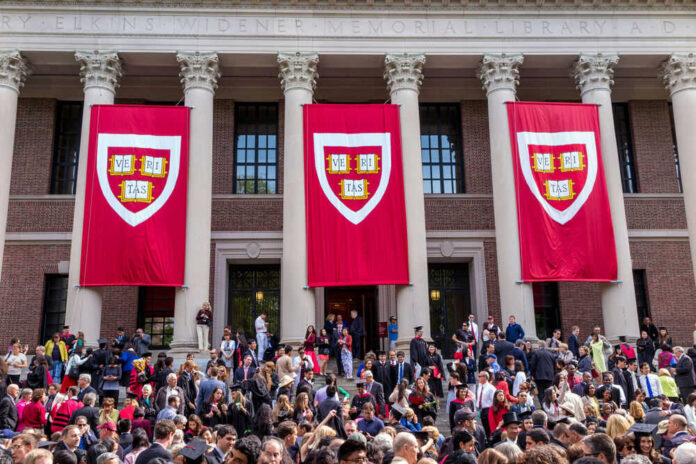
Proclamation 10948 specifically restricted foreign student entry to Harvard, though federal courts blocked immediate implementation through temporary restraining orders. The legal victory provided only temporary relief, as universities recognized the administration’s persistence in pursuing its agenda through alternative regulatory channels. Many institutions began preemptively adjusting policies to avoid becoming the next target of federal scrutiny.
Financial Pressure Overwhelms Institutional Resistance
Federal funding represents the lifeblood of major research universities, with billions in grants, contracts, and student aid flowing from Washington annually. The administration’s threats to withdraw this support created immediate financial pressure that governing boards could not ignore. Universities dependent on federal research funding faced existential questions about their ability to maintain operations without government support.
The economic reality proved more compelling than principles of academic freedom for many institutions. With endowments under scrutiny and state funding often insufficient to replace federal dollars, universities found themselves calculating the true cost of resistance. The latest capitulation reflects this harsh arithmetic, as institutional leaders prioritized financial survival over ideological confrontation with federal authorities.
Broader Implications for Higher Education
This pattern of federal intervention establishes dangerous precedents for government control over university operations. The combination of DOJ investigations, funding threats, and executive orders creates a comprehensive toolkit for federal coercion that extends far beyond traditional regulatory oversight. Other universities are watching these developments closely, adjusting their own policies to avoid similar confrontations with federal authorities.
The chilling effect on academic freedom and international engagement may prove the most lasting consequence of these battles. Universities are reconsidering international partnerships, foreign student recruitment, and research collaborations that might attract federal scrutiny. The brain drain concerns raised by analysts reflect real risks to American higher education’s global competitiveness as institutions retreat from international engagement to avoid regulatory problems.
Copyright 2025, libertyinsidernews.com