

(LibertyInsiderNews.com) – Panama’s Supreme Court just delivered a strategic victory for American interests by voiding Chinese-linked port contracts at the Panama Canal, validating President Trump’s warnings about foreign control of this critical trade chokepoint.
Story Snapshot
- Panama’s Supreme Court ruled Hong Kong-based CK Hutchison’s port concessions unconstitutional on January 29, 2026, ending decades-long control of key canal ports
- The decision follows President Trump’s 2025 inaugural warnings that China’s commercial presence near the canal threatens U.S. national security
- Balboa and Cristobal ports handle logistics for 5% of global maritime trade, making this ruling a pivotal moment in U.S.-China competition
- Panama now faces the challenge of renegotiating port operations while navigating pressure from both superpowers
Court Strikes Down Foreign Port Control
Panama’s Supreme Court declared the concession contracts for Balboa and Cristobal ports unconstitutional in a brief statement on January 29, 2026, immediately voiding CK Hutchison Holdings’ long-standing control of these strategic facilities. The Hong Kong-based firm had operated the ports at both ends of the Panama Canal for decades, serving as a critical logistics hub for global shipping. Local reporting from La Prensa confirmed the decision, which cited constitutional violations in the contract terms rather than explicit security concerns, though the timing clearly reflects mounting geopolitical pressures.
Trump’s National Security Warnings Vindicated
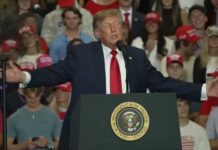
President Trump spotlighted Chinese commercial influence at the canal during his 2025 inaugural address, declaring bluntly that “China is operating the Panama Canal, and we didn’t give it to China.” While CK Hutchison operates as a private Hong Kong corporation rather than a state-owned Chinese entity, Trump’s administration views such distinctions as irrelevant when strategic infrastructure falls under foreign control linked to Beijing’s sphere of influence. The Supreme Court ruling validates these security concerns, demonstrating that Panama recognizes the constitutional and strategic problems of ceding control over facilities adjacent to a waterway handling five percent of world maritime commerce.
Strategic Waterway Faces Operational Uncertainty
The voided contracts create immediate uncertainty for port operations that undergird the Panama Canal’s economic ecosystem. Balboa on the Pacific side and Cristobal on the Atlantic side provide essential logistics services for vessels transiting the canal, a route completed under U.S. stewardship in 1914 and transferred to Panama in 1999. Panama’s government must now renegotiate or re-tender operations, likely favoring firms without Chinese connections to align with constitutional requirements and avoid further U.S. scrutiny. This shift threatens the decades of foreign investment that anchored port efficiency but also opens opportunities for American or allied companies to secure strategic footholds.
Geopolitical Chess Match in Latin America
The ruling places Panama squarely in the crossfire of U.S.-China rivalry, forcing the small nation to balance sovereignty, economic needs, and diplomatic pressures from superpowers. Analysts note that any changes to port control carry legal, economic, and diplomatic consequences, especially as Trump’s administration signals readiness to defend Western Hemisphere interests against Chinese encroachment. Panama’s reliance on foreign operators for port efficiency complicates its position, but the constitutional basis for the ruling provides legal cover for distancing itself from Beijing-linked entities. Shipping firms and local workers at Balboa and Cristobal face potential disruptions, while global trade watches nervously as a critical chokepoint enters a period of transition.
Constitutional Principle Meets Strategic Necessity
By grounding the decision in constitutional violations rather than overt geopolitics, Panama’s Supreme Court offers a legally defensible rationale that nonetheless serves U.S. strategic objectives. This approach allows Panama to reclaim sovereignty over its infrastructure without directly antagonizing Beijing, though China will undoubtedly view the move as U.S.-influenced interference. For American conservatives, the ruling underscores the importance of assertive leadership in defending hemispheric security against globalist agendas that prioritize foreign investment over national interests. Trump’s willingness to publicly challenge foreign control over the canal forced this issue into the open, demonstrating that strategic clarity and constitutional governance can align when nations prioritize sovereignty over short-term economic convenience.
Sources:
Panama Supreme Court Annuls CK Hutchison Port Contracts – China-Global South Project
Panama’s Top Court Rules Chinese-Linked Firm’s Canal Port Concessions Unconstitutional – TRT World
Copyright 2026, LibertyInsiderNews.com