
(LibertyInsiderNews.com) – California’s $135 billion high-speed rail “miracle” is still years late, billions over budget, and a glaring symbol of blue-state mismanagement that Trump’s America is no longer willing to bankroll.
Story Snapshot
- Newsom is loudly celebrating California’s high-speed rail in 2025 even as costs explode from $33 billion to roughly $130–135 billion and timelines slip into the 2030s.
- Construction is concentrated in the rural Central Valley, while the promised San Francisco–Los Angeles connection remains decades and tens of billions of dollars away.
- The project survives on cap-and-trade revenue, state bonds, and episodic federal grants, raising serious questions about fiscal responsibility and long-term solvency.
- Private investors are circling, but only if taxpayers keep taking most of the risk for a project critics call a permanent boondoggle.
Newsom’s Speech Versus the Project’s Bloated Reality
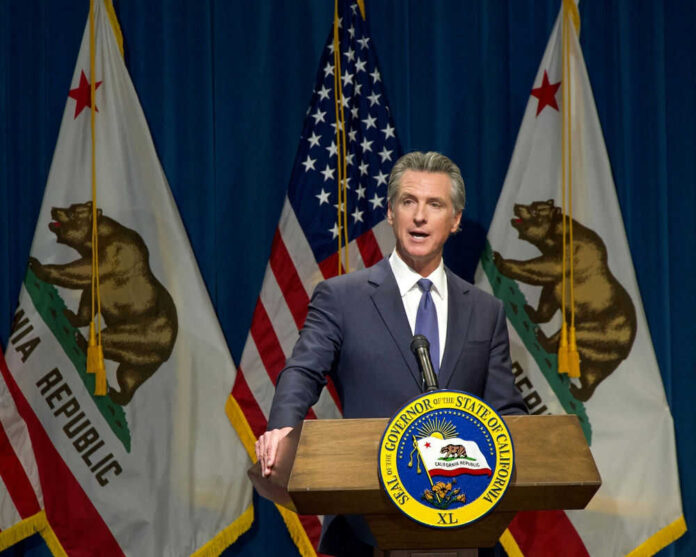
During his January 2025 State of the State–style address, Governor Gavin Newsom portrayed California’s high-speed rail as a transformational climate and infrastructure victory, holding it up as proof that progressive governance can deliver big things. He pointed to more than 170 miles in the Merced–Bakersfield corridor under design or construction and touted dozens of new structures rising from Central Valley farmland. What he did not emphasize is that the latest estimates peg the full San Francisco–Los Angeles/Anaheim system at roughly $130–135 billion, almost quadruple the original 2008 promise of about $33 billion, with real service for major population centers pushed well into the 2030s.
For fiscally conservative Americans watching from outside California, the picture looks less like visionary planning and more like a warning sign about what happens when green ideology outruns basic accountability. Voters were told in 2008 they would get an 800‑mile, 220‑mph system linking San Francisco and Los Angeles in under three hours, backed by a mix of state bonds, federal grants, and private capital. Instead, they have a fragmented construction zone, climbing estimates, repeated business plan rewrites, and a permanent hunt for more taxpayer money to keep the venture alive.
How a $33 Billion Promise Turned Into a $135 Billion Megaproject
The high-speed rail saga began when Californians narrowly approved Proposition 1A in 2008, authorizing nearly $10 billion in state bonds for the line. Early projections framed the effort as affordable, transformative, and imminent, convincing many moderate voters that a one-time investment would modernize transportation without breaking the bank. Over the next decade and a half, reality took over: land acquisition fights, environmental reviews, local opposition in dense coastal corridors, and design changes drove costs up and schedules out, mirroring the worst patterns of American megaproject overruns like Boston’s Big Dig but on an even larger scale.
As problems piled up, political messaging shifted to keep the project alive. Under President Obama, Washington showered California with federal grants and labeled it the future of American rail, bolstering progressive hopes that the rest of the country would eventually follow. When President Trump first took office, his administration moved to rescind nearly $1 billion in promised funds, citing missed milestones and mismanagement, triggering lawsuits and partisan warfare. The Biden administration later restored that money and added more, aligning the project with its climate and rail agenda. Each swing in federal policy highlighted a deeper structural issue: California launched the largest rail megaproject in U.S. history without a locked-in, full-life funding plan, leaving taxpayers vulnerable to endless add-ons.
Central Valley First: A Partial Line Sold as a Grand Vision
Facing mounting criticism by 2019, Newsom announced a “reset,” saying the state would focus first on an initial operating segment between Merced and Bakersfield rather than immediately delivering the marquee San Francisco–Los Angeles connection. That pivot effectively turned the Central Valley into a test bed: about 171 miles are now in design or construction, with nearly 80 miles of guideway and roughly 60 major structures completed. Environmental clearance covers roughly 463 of 494 miles for the full mainline, meaning paper progress is far ahead of what travelers can actually ride.
Officials say the goal is to substantially complete civil infrastructure for a 119‑mile core section by 2026 and extend to Merced and Bakersfield by around 2032, assuming funding holds. Only then would the system begin to resemble a functioning line rather than a collection of isolated worksites. Even on that limited segment, the pitch leans heavily on climate rhetoric and job creation, noting about 16,400 jobs, mostly in the Central Valley, with roughly 1,700 workers on site daily. For taxpayers outside California struggling with inflation and higher federal debt, those jobs come with a steep price tag and no guarantee of ever seeing a full, self-sustaining route between major cities.
New Contracts, New Buzzwords, Same Taxpayer Risk
Project leaders now talk about a 2026 “pivot” toward faster delivery using large integrated contracts and public‑private partnerships. The California High‑Speed Rail Authority has approved roughly $507 million in state-funded procurement for rail, ties, overhead lines, and other materials to start installing the nation’s first electrified high-speed track on a 119‑mile section. A larger Track and Systems Construction Contract, estimated around $3.5 billion, is targeted for award by mid‑2026, with track laying expected to begin by the end of that year if schedules hold.
At the same time, the state has committed about $1 billion per year from its cap‑and‑trade or Cap‑and‑Invest program through 2045, creating a long-term revenue stream tied directly to California’s aggressive climate agenda. Supporters argue that this structure provides stability and aligns the project with emissions goals. Skeptics see it differently: a decades-long obligation that locks future taxpayers and businesses into funding a single rail megaproject even if ridership forecasts fall short or better technologies emerge. For conservatives who favor limited government and cautious spending, the reliance on regulatory-driven revenue to prop up a once‑in‑a‑generation gamble reinforces concerns about central planning masquerading as infrastructure.
Private Investors Circle While Taxpayers Stay on the Hook
In late 2025, Newsom’s rail authority launched a process to bring in private investors and developers, aiming to select a co‑development consortium by summer 2026. Around 30 domestic and global infrastructure funds have expressed interest in potential roles, encouraged by the prospect of long-term contracts, land development around stations, and steady revenue streams backed by government commitments. The pitch is clear: private capital can help accelerate construction, share risks, and bring international high-speed rail experience to a U.S. project that has struggled to deliver on time.
Yet beneath the glossy talk of partnerships and innovation, the fundamental risk structure remains tilted toward the public. Private firms typically demand strong guarantees before investing in such projects, meaning taxpayers still shoulder cost overruns, legal setbacks, and uncertain ridership. For Americans in more conservative states, California’s high-speed rail now serves as a cautionary tale: when politicians oversell mega‑visions, ignore realistic budgets, and treat climate buzzwords as a substitute for hard numbers, citizens end up paying for “transformative” projects that may never fully arrive.
Sources:
News Release: California High-Speed Rail Accelerates Timeline for 2026 Rail Installation
California High-Speed Rail: 2026 Contracts and Milestones
California High-Speed Rail Authority CEO Aims to Accelerate Construction
News Release: California High-Speed Rail Launches Process to Draw in Private Investors
BuildHSR – California High-Speed Rail Project Information
California High-Speed Rail Looks to Private-Sector Funding
Copyright 2026, LibertyInsiderNews.com