
A fragile but crucial Trump-brokered cease-fire between Israel and Lebanon is testing whether American strength can still hold back a wider Middle East war at a time when Hezbollah and Iran would love to drag the region – and our troops – into chaos.
Story Snapshot
- President Trump announced a U.S.-brokered 10-day cease-fire between Israel and Lebanon after direct talks with leaders on both sides.
- The deal, which implicitly constrains Hezbollah attacks in exchange for Israeli restraint, has already faced violations and remains only partially observed.[1][2][3]
- Trump pushed Israel toward “surgical” responses instead of all-out strikes in Lebanon to keep the truce from collapsing while still backing Israel’s right to self-defense.[1]
- The cease-fire was extended by three weeks at the White House, giving U.S. diplomacy more time to pursue a longer-term border arrangement.[2][4]
Trump’s Cease-Fire: A Rare Break in a Volatile Neighborhood
President Donald Trump announced that Israel and Lebanon agreed to a 10-day cease-fire to halt escalating clashes along their shared border, after days of direct engagement with Israeli Prime Minister Benjamin Netanyahu and Lebanese leadership. Coverage of the announcement describes Trump declaring that the truce would begin at a set time that evening, framing it as a concrete pause in hostilities rather than vague diplomatic talk. For conservatives used to Washington drift, this looked like classic Trump: pick up the phone, lean on both sides, and get guns to go quiet.
Reports on the ground stressed that this was not a theoretical agreement but a practical attempt to stop “all shooting” across the border between Israeli forces and Hezbollah fighters operating from Lebanese territory.[1] Trump and his team presented the understanding as including real tradeoffs: Israel would avoid major moves deeper into Lebanon, including into Beirut, if Hezbollah stopped attacking Israeli soldiers and communities.[1][2] That approach tied diplomacy to concrete security outcomes, trying to protect civilians while keeping Israel’s deterrence credible.
A Partial Truce Under Fire: Violations, Pressure, and Fragility
Even as Trump’s announcement made headlines, some coverage quickly described the truce as “partial,” with reports that exchanges of fire in southern Lebanon continued after the cease-fire formally took effect.[2][3] One account noted that the two sides still traded shots overnight, underscoring how difficult it is to turn battlefield momentum off with a single statement, even from a U.S. president.[3] This gap between political announcement and military compliance is a recurring pattern in the region and fueled skepticism about how durable the Trump-brokered pause could be.
Axios reporting later highlighted that the cease-fire was being “only partially adhered to,” with officials in both Israel and Lebanon worried it might unravel before its scheduled expiration.[1] In that interview, Trump said he was on the phone with Netanyahu daily and urged Israel to limit its response to “surgical” military actions in Lebanon instead of broad strikes that destroy buildings and risk civilian casualties.[1] A U.S. official emphasized that Hezbollah was not a formal signatory and was trying to undermine the arrangement, reflecting the reality that the Lebanese state and the Iran-backed militia do not always move in lockstep.[1]
Extending the Deal: Buying Time for a Bigger Border Fix
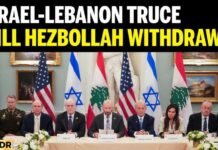
As the initial 10-day truce approached its end, Israeli and Lebanese officials met at the White House and agreed to extend the cease-fire for three more weeks, again under U.S. auspices.[2][4] Standing with the ambassadors of both countries, Trump announced the extension and said there was a “great chance” the two sides could eventually reach a broader peace deal, even though Israel and Hezbollah had already accused each other of multiple violations of the original agreement.[2] That extension did more than just pause fire; it showed that Washington could still convene longtime enemies and keep them talking instead of shooting.
🚨✍️🚨President Donald Trump has established the loss of American lives as his absolute red line for the U.S.-Iran ceasefire, privately telling aides he will only terminate the fragile truce if Tehran kills American troops. According to a report by the Wall Street Journal, U.S.…
— WORLDINTEL24🛜 (@WORLDINTEL24) June 4, 2026
U.S. officials signaled that the White House wanted to use the breathing room to explore wider talks tackling the deeper border problem, including limiting Hezbollah’s ability to operate close to Israel’s frontier and supporting the Lebanese Armed Forces’ efforts to control their own territory.[1][2] Lebanon continued to demand a full stop to Israeli attacks and a withdrawal of Israeli troops from contested areas, while Israel remained focused on preventing Hezbollah from rebuilding positions that threaten northern towns.[2] For American conservatives, the dynamic is familiar: a terrorist-backed militia trying to exploit a weak state, while a key U.S. ally looks to Washington to keep pressure on the bad actors and prevent a larger war.
Sources:
[1] Web – Trump administration brokers cease-fire between Israel and Lebanon
[2] YouTube – Hezbollah and Israel come to a partial, US-brokered ceasefire deal …
[3] YouTube – Israel and Hezbollah agree to partial ceasefire, though …
[4] Web – Trump claims success in revived Lebanon ceasefire – The Week
© libertyinsidernews.com 2026. All rights reserved.