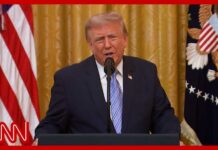

Trump’s latest election-security push revived a claim that China stole 220 million voter files, then widened it into a broad warning that America’s voting system is wide open to foreign attack.
Quick Take
- Trump declassified election-related documents and said they show major foreign threats to U.S. elections.
- The White House said China illicitly acquired 220 million U.S. voter files starting in the 2020 election cycle.
- Reporting also says the released material repeats known election-security concerns, not proof that any election outcome changed.
- The episode adds to a long-running fight over fraud claims that have shaped public trust and political strategy.
What Trump Released
President Donald Trump said Thursday night that he was declassifying intelligence and other reports on election security. The White House said the material shows long-known weaknesses in voting systems and describes China’s alleged theft of 220 million voter files. Those files reportedly included names, addresses, phone numbers, party preferences, and other data tied to registration and voting history.
The White House framed the release as proof that election systems are “extremely exposed” and that foreign powers can exploit voter data. But CNN reported that the documents mainly highlight problems officials have discussed for years, and that they do not prove Trump’s claims about any past election result. CBS News also noted that the source of the data breach and what China did with the data remain unclear.
What the Intelligence Claims Do, and Do Not, Show
The released material centers on foreign access to voter information, not on proof that votes were changed. A Cybersecurity and Infrastructure Security Agency and Federal Bureau of Investigation bulletin from 2020 said much voter information can be bought or obtained from public sources, and that known access to voter registration data did not affect voting or election results.
That point matters because Trump tied the data claim to a much bigger charge: that foreign actors can alter the democratic process itself. But the reporting package says the available intelligence does not establish that any technical part of the 2020 election was altered, including registrations, ballots, tabulations, or results. The documents instead reinforce a narrower point about data exposure and the need for stronger safeguards.
The Bigger Political Fight
The episode fits a pattern seen since 2016: claims of election fraud can boost distrust, energize supporters, and keep attention on the system instead of on policy failures. Research cited in the package says false fraud claims can lower confidence in election integrity, even when they do not reduce support for democracy itself. Other studies in the package say belief in election fraud remains widespread despite little evidence at meaningful scale.
President Donald Trump delivered a primetime address revealing declassified intelligence showing the Chinese Communist Party executed the largest election data compromise in U.S. history, illicitly acquiring 220 million American voter files (names, addresses, phone numbers, party… pic.twitter.com/LvrPysOOHq
— Capitol Times Magazine (@capitoltimesmag) July 17, 2026
That makes the dispute about more than one speech or one batch of documents. It touches a broader public fear shared across party lines: that powerful institutions know more than they admit, move too slowly, and fail to protect ordinary voters. At the same time, the research package also shows that repeated claims of rigged elections can deepen public confusion when the evidence does not support them.
Why It Matters Now
Trump’s announcement lands in a country where election security is already a live issue, and where both parties use the issue to draw sharp political lines. Supporters see the release as overdue sunlight on hidden risks. Critics see another round of claims that revive distrust without proving vote manipulation. The result is a familiar American argument: how to protect elections without turning every weakness into a claim that the system itself is broken.
Sources:
cbsnews.com, youtube.com, livemint.com, facebook.com, instagram.com, fbi.gov, frontiersin.org, cambridge.org, pmc.ncbi.nlm.nih.gov, pnas.org, eipartnership.net
© libertyinsidernews.com 2026. All rights reserved.