
Just 90 miles off America’s coast, a powerful new listening post in Cuba is coming online while Washington argues over who runs it and what to do about it.
Story Snapshot
- A major signals-intelligence site at Bejucal in Cuba has finished a large circular antenna array that is likely now operational.
- U.S.-linked analysts say the site could help monitor American military and communications traffic across Florida, the Gulf, and the Caribbean.
- Experts disagree on how directly China is involved, exposing how little the public can verify about threats on America’s doorstep.
- The fight over this base highlights a deeper problem: citizens on both left and right are kept in the dark while unelected security elites make the real decisions.
What satellite images show at Cuba’s Bejucal base
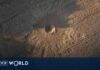
New satellite analysis from the Center for Strategic and International Studies, a Washington think tank, shows that construction at the Bejucal signals-intelligence base outside Havana is finished on a large circularly disposed antenna array, or CDAA.[3] Over the past two years, crews tore out an older linear antenna field and replaced it with a 32‑antenna system arranged in two rings, which CSIS says is larger and likely more capable than any previous Cuban array.[3] CDAA systems are designed to intercept and locate radio signals over long distances, helping whoever runs them watch air, sea, and communications activity across wide areas.[3]
From Bejucal’s position in northwest Cuba, analysts say this new array could track sensitive U.S. military and commercial traffic across the Caribbean, the Gulf of Mexico, and the southeastern United States, including around Florida bases and launch sites.[2] Bejucal itself is not new. It dates back to the Soviet era and played a role in the Cuban Missile Crisis, later evolving into Cuba’s largest active signals-intelligence hub.[5] What is new is the scale of investment and the clear shift toward high‑end electronic surveillance, just a short flight from Miami.[3]
Is this really a Chinese spy base or a Cuban one?
This is where the story becomes murky, and where many Americans on both sides of the aisle feel they are being managed, not informed. CSIS and several news outlets describe Bejucal as “China‑linked” or “suspected Chinese,” pointing to years of U.S. congressional testimony and government hints that China uses Cuban sites to collect intelligence on American targets.[2][16][17] Some reports go further, saying U.S. intelligence has “no doubt” China operates key technology at these facilities.[11] Yet even CSIS, the very group driving the latest revelations, admits there is “no clear publicly available evidence” proving China runs Bejucal.[3][16]
Other researchers push back harder. A detailed review hosted by the National Security Archive argues the “China spy bases” narrative rests on rumors, anonymous officials, and satellite photos that show antennas—but not foreign control.[6] Journalists who visited nearby towns found locals and regional experts insisting the Bejucal base is a long‑standing Cuban military facility, not a Chinese or Russian one.[6][14] They also note that antennas can support space tracking, telecom, or drug interdiction, not just espionage.[6] The gap between what insiders claim in secret and what the public can see in open sources feeds broad mistrust of both foreign powers and our own security bureaucracy.
Why this matters for U.S. security—and public trust
Whatever flag flies inside the fence, the capability at Bejucal is real. Four sites—Bejucal, Wajay, Calabazar, and El Salao—now form a Cuban network of electronic listening posts that can collect signals from U.S. military bases, space launches, and shipping lanes.[1][7][16] Analysts warn that such systems can map how American weapons, radars, and communications behave in real life, even if messages are encrypted.[8][17] That kind of insight can erode U.S. advantages over time and complicate any future crisis near our own shores. For citizens who already worry about open borders, hollowed‑out manufacturing, and a stretched military, the idea of an advanced listening post so close to Florida feels like yet another sign that elites have let basic defenses slip.
At the same time, the way this issue is handled looks familiar to many frustrated Americans. A Washington think tank funded by large donors releases striking satellite imagery. Major outlets run dramatic headlines about “Chinese spy bases” near Guantanamo Bay.[7] Officials hint at dire threats but keep the key intelligence classified. Then Cuba and China issue flat denials, and independent reporters point out the lack of hard proof in public.[6][17][18] Ordinary citizens are left choosing which set of elites to believe, with almost no way to verify who is telling the truth. For people who already suspect a “deep state” culture of permanent security managers, the pattern deepens the sense that they are being used to support whatever policy is chosen behind closed doors.
How this fits the bigger U.S.–China rivalry and a failing system at home
Bejucal is also part of a larger shift: China pushing surveillance and military reach into the Western Hemisphere while the United States projects power into East Asia.[1][16] Some Chinese analysts frame these bases as payback for U.S. patrols near China’s coast.[3] Meanwhile, Washington debates more spending, more sanctions, and more deployments—costs that fall on taxpayers who are already dealing with inflation, high energy costs, and wages that do not keep up. Whether you lean conservative and fear globalism, or lean liberal and fear endless militarization, the pattern looks the same: permanent tension abroad, while basic problems at home go unsolved.
China's spy base at Bejucal in Cuba went operational this week, confirmed by new satellite imagery, while Washington's fuel blockade pushes the island toward collapse and a fresh migration wave. A breakdown:
1) CSIS published satellite imagery on June 18 confirming Bejucal,…
— Shaiel Ben-Ephraim (@academic_la) June 19, 2026
Both sides of the political spectrum can also see how secrecy and half‑answers erode democratic control. If China is truly operating a powerful listening post 90–100 miles from Florida, many Americans would favor clear, tough steps to protect U.S. forces and infrastructure. If, instead, the threat is being exaggerated to justify more defense contracts, sanctions, or political theater, citizens deserve to know that too. Either way, the Bejucal base underscores a hard truth: America is being watched, but Americans are not being fully informed. That reality, more than any single antenna array, is what makes people feel their government no longer serves them.
Sources:
[1] Web – China’s Caribbean Listening Post? Satellite Imagery Shows Cuba Spy …
[2] Web – Satellite imagery shows China expanding spy bases in Cuba – VOA
[3] Web – At the Doorstep: A Snapshot of New Activity at Cuban Spy Sites – CSIS
[5] Web – New satellite imagery shows recent developments at suspected …
[6] Web – China-linked spy site in Cuba is now fully operational
[7] Web – [PDF] China Spy Bases: Rumors, Speculation and Bad Analysis
[11] X – China’s spy base at Bejucal in Cuba went operational this week …
[14] Web – Satellites capture build-out of Cuban spy sites with suspected China …
[16] Web – Enhanced antenna array at Bejucal raises concerns over US military …
[17] Web – China’s Intelligence Footprint in Cuba: New Evidence and … – CSIS
[18] Web – China-linked spy site expansion in Cuba raises alarms near key US …
© libertyinsidernews.com 2026. All rights reserved.