
A 7.4 magnitude earthquake tore through western Colombia, killing at least 111 people and flattening buildings in cities hundreds of miles apart within seconds.
Quick Take
- A 7.4 magnitude earthquake struck near San Jose del Palmar in Colombia’s Choco region, about 250 miles west of Bogota.
- At least 111 people died and 87 were hurt, with dozens of buildings collapsed across several cities.
- President Abelardo De La Espriella declared a national emergency and called an urgent meeting with disaster officials.
- Seven airports suspended flights so engineers could check runways and terminals for damage.
- Officials said there was no tsunami risk as rescue crews kept digging through rubble.
Deadly Quake Strikes Western Colombia
The earthquake hit at a depth of about 64 miles near San Jose del Palmar, according to the U.S. Geological Survey and Colombia’s own geological service. Reuters called it the strongest quake to hit the country this century. Officials reported at least 111 dead and 87 injured in the hours after the ground shook, with numbers expected to climb as rescue teams reached harder-hit areas.
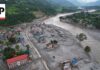
Damage stretched far beyond one city. ABC News reported at least 61 buildings collapsed and more than 1,600 homes were damaged or destroyed. Health centers, community buildings, roads and seven airports also took hits. The wide spread of destruction pointed to a quake felt across much of the country’s western half, not just in its biggest cities.
Government Declares National Emergency
President De La Espriella convened an emergency meeting with Colombia’s disaster response agency, known as UNGRD, to review damage reports and coordinate the response in hit areas. The United Nations confirmed the national government had activated its emergency response systems and was still assessing damage and needs across the affected zones.
The United Nations also released an early official tally: 1,575 homes damaged, 37 destroyed, 61 buildings collapsed, 18 health centers hit and 52 schools damaged. That kind of detailed count, coming directly from a UN statement rather than secondhand reporting, gives the public a firmer picture of the damage than early news headlines alone could offer.
Cities Left in Ruins as Search Continues
In Cali, rescue teams and ordinary citizens worked side by side, passing chunks of concrete and rubble down long lines of volunteers to reach people trapped inside collapsed buildings. The mayor of Pereira reported at least 18 deaths in his city alone, while Cali’s mayor said about 25 buildings had come down there.
Colombia’s Maritime Authority said there was no tsunami threat, a key safety update that let coastal communities focus on rescue instead of evacuation. That kind of quiet, technical announcement rarely makes headlines, but it mattered just as much to families near the coast as the more dramatic images of collapsed buildings.
Airports Shut Down for Safety Checks
Colombia’s civil aviation authority grounded flights at several western airports, including Pereira, Manizales, Quibdo, Armenia, Cartago and Buenaventura, so engineers could inspect runways and terminals for structural damage. Shutting down seven airports at once is a striking sight, but it reflects a standard safety step after a major quake, not proof that the system itself failed.
BREAKING / UPDATE: A powerful magnitude 7.4 earthquake struck western Colombia on the morning of Monday, August 10, 2026 (around 7:34 a.m. local time / 12:34 UTC), causing widespread destruction, collapsing buildings, and claiming at least 111 lives so far, with dozens more…
— Naija Daily Update (@9jaDailyUpdates) August 10, 2026
Casualty figures moved fast in the first day, with different outlets citing counts from 20 to well over 100 as reports came in from scattered towns and cities. That kind of swing is common after a major disaster, when local and national officials are still piecing together reports from hard-to-reach areas near the epicenter.
A Test for Colombia’s New Government
The disaster lands early in President De La Espriella’s term, putting his administration’s crisis response on public display right away. For millions of Colombians watching their government’s next moves, how fast aid reaches damaged towns, and how honestly officials report the toll, will shape trust in a government still finding its footing.
Sources:
theguardian.com, reuters.com, abcnews.com, youtube.com, foxweather.com, nbcnews.com, apnews.com
© libertyinsidernews.com 2026. All rights reserved.