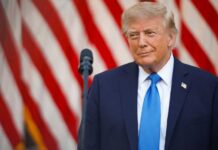

On the eve of a high-profile U.S.–China summit, a detained American scientist’s fate may hinge on a single ask from President Trump.
Story Snapshot
- The White House told the scientist’s wife that President Trump will ask Xi Jinping to free him this week.
- China says there is no wrongful detention and that the case follows Chinese law.
- The United States labeled similar cases “wrongfully detained,” raising stakes for leader-level talks.
- The case fits a wider pattern of detentions tied to tense U.S.–China relations.
What the Family Says Will Happen at the Summit
Reuters reported that Yufang Rong, the wife of American seismologist Youlin Chen, said the White House assured her President Trump will ask Chinese President Xi Jinping to release her husband when they meet this week. Rong said her husband’s work studied shockwaves from North Korean underground nuclear tests and used public data. She said U.S. agencies funded parts of the research. Her goal is to move the case from quiet talks to a direct leader-to-leader request.
Rong said Chen’s research was openly published and done with Chinese scientists, which she argues undercuts any spying claim. She described years of strain on their family since Chen’s 2024 detention in China. Supporters say the summit is a rare chance to break the stalemate. They want a clear ask, a timeline, and a path home. They also want other U.S. detainees raised in the same meeting, to prevent a one-off deal.
China’s Position and the Espionage Charge
Chinese officials deny that any American is “wrongfully detained” and say judicial bodies handle cases by law. Public reporting says authorities accuse Chen of espionage linked to his seismology work, a charge his family rejects as baseless. Beijing has not shared a detailed charging theory in open sources. That gap fuels U.S. concern about opaque rules that can turn normal academic work into a national security case.
Earlier this year, the State Department and the White House told Rong that President Trump already raised Chen’s case with Xi during a trip to Beijing, but no release followed. That history sets a sober baseline for this week’s talks. Families often hear promises to “look into it.” Few see fast results. That is one reason advocates push for firm asks paired with public follow-through, so momentum does not fade once cameras leave.
Why This Case Resonates Across Party Lines
Americans from both the right and the left worry that regular people pay the price when great powers clash. Hostage advocacy groups say China has held many Americans in unfair ways, including through exit bans, for years. That pattern makes families fear their loved ones are bargaining chips. When a case like Chen’s gets leader attention, it feels like a test of whether Washington can actually bring citizens home, not just issue statements.
The wife of US scientist Youlin Chen, detained in China, says President Trump will ask Chinese President Xi to release him, when the pair meet this week https://t.co/4IWMLjJSE1 pic.twitter.com/C8NowQJsfb
— Reuters (@Reuters) September 23, 2026
Readers see a bigger trust problem too. Many believe U.S. officials talk tough but fail to deliver. They point to past summits that produced little on human rights or detainees. This week’s meeting gives the administration a chance to show results. A concrete outcome would signal that top-level pressure still matters. A miss would harden a view that global deals help elites, while families wait and worry without answers.
What We Know About Chen’s Work and Risk
Rong says Chen’s seismology focused on detecting North Korean nuclear test shockwaves and relied on public data and open publication, with funding from U.S. government sources including the State Department and the Air Force Research Laboratory. That profile looks academic to U.S. observers but can draw scrutiny in China if data or contacts cross evolving national security lines. The lack of a public charging memo leaves key facts hidden, which deepens doubt about due process.
U.S. policy tools exist but have limits. Designating a person as “wrongfully detained” elevates a case and can bring sanctions or travel warnings. Reuters reported a recent wrongful detention designation in a separate case as Xi’s visit neared, a signal that Washington is hardening its stance. Yet designations alone rarely free detainees. Results often require a direct tradeoff, a goodwill gesture, or steady diplomatic pressure matched to Beijing’s interests.
What to Watch Next
Watch for whether President Trump raises Chen’s case in the main session or a smaller pull-aside, and whether a joint readout mentions detainees. Look for signs of a process step in China, like a humanitarian medical visit or a shift to house arrest. Any movement within days of the summit would be notable. If nothing changes, expect Congress and advocacy groups to push for tougher tools and clearer travel warnings for China.
Sources:
youtube.com, mezha.net, scmp.com, apnews.com, globalbankingandfinance.com, bbc.com
© libertyinsidernews.com 2026. All rights reserved.