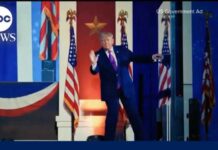

President Trump used a friendly One America News interview to sketch U.S. moves on Iran, oil, and federal investigations while signaling how his White House wants the story told.
Story Snapshot
- OANN said it recorded a half-hour White House interview with President Trump covering Iran, oil, and domestic issues.
- The sit-down highlights how presidents use aligned outlets to set an agenda while limiting friction.
- The media-choice fight matters because it shapes which facts and frames reach voters first.
- Past coverage shows Trump’s interviews often drive fact-checks and broader press reactions.
What Happened at the White House
One America News announced that its White House correspondent, Daniel Baldwin, completed a thirty-minute interview with President Trump in the Roosevelt Room. The network said the session covered a wide range of policy topics and would air in prime time. The interview took place on October 1, and the announcement followed on October 2. The description frames a question-and-answer format on foreign policy, energy, and law enforcement matters central to this term.
White House live pages often carry briefings or pool events, and this sit-down fits a pattern where the administration blends official settings with outlet exclusives. That mix lets a president reach viewers with fewer interruptions and more time for his message. Presidents of both parties have used this tactic during tense moments. The timing here overlaps with ongoing questions on Iran, oil prices, and domestic security, which are front-of-mind for many voters.
Why the Outlet Choice Matters
Scholarly work finds that when a president publicly engages with aligned networks, those networks gain status and attention. That lift can increase bookings of party figures and shape what other media cover next. During Trump’s earlier presidency, public mentions of outlets like One America News were linked to more mainstream press attention for those outlets. That cycle can raise the outlet’s reach and influence on the national story.
Follow-on research from the same project explains the mechanism. Presidential attention acts like a seal of approval for the audience that already trusts the leader. Republican officials then appear more often on those channels, and journalists elsewhere pick up the most newsworthy clips. The result is a loop that rewards direct access and quick distribution. The White House gains message control, and the outlet gains prestige and viewers.
The Policy Stakes Inside the Interview
Reporting this year shows Iran policy has swung between military pressure and on-and-off de-escalation. Those moves carry risks for U.S. forces and partners in the region, and they move markets. Oil prices react to talk of strikes or deals, so any clear White House line on Iran and energy is news that hits wallets. When a president pairs those topics with a friendly interview, the initial frame can set the tone for wider coverage that follows.
Past high-profile interviews also sparked rapid fact checks and transcript releases from large outlets. Networks posted full videos and transcripts to show context after tense exchanges with Trump. That pattern suggests this One America News interview could ripple across the press cycle, prompting verification steps and policy analysis from other newsrooms. The end result is that one booking can define several days of headlines and debate.
What It Means for Voters Tired of Spin
Americans across the spectrum worry that leaders talk past real problems. Many say they want plain answers on gas prices, border security, budgets, and wars. A half-hour with the president on those points is useful if it brings clear facts and commitments. The challenge is that access often comes with control over the setting and pace. That is why distribution, transcripts, and independent coverage later in the week will matter to people seeking clarity.
Viewers can expect the first wave of attention to center on Iran, energy, and federal investigations, since those issues affect safety, jobs, and trust in government. Clear statements on oil strategy and Middle East posture could shape business plans and family budgets. Direct comments on investigations can affect how people judge fairness in the system. When a president speaks on all three, even in a friendly room, the stakes reach far beyond politics into daily life.
Sources:
oann.com, nitter.jaydenha.uk, apnews.com, nytimes.com
© libertyinsidernews.com 2026. All rights reserved.